Aerospace Engineering Track · Ages 10+
Your child designs, builds and flies real aircraft.
From a first foam airplane to a jet-style aircraft. Every build goes into your child's portfolio.
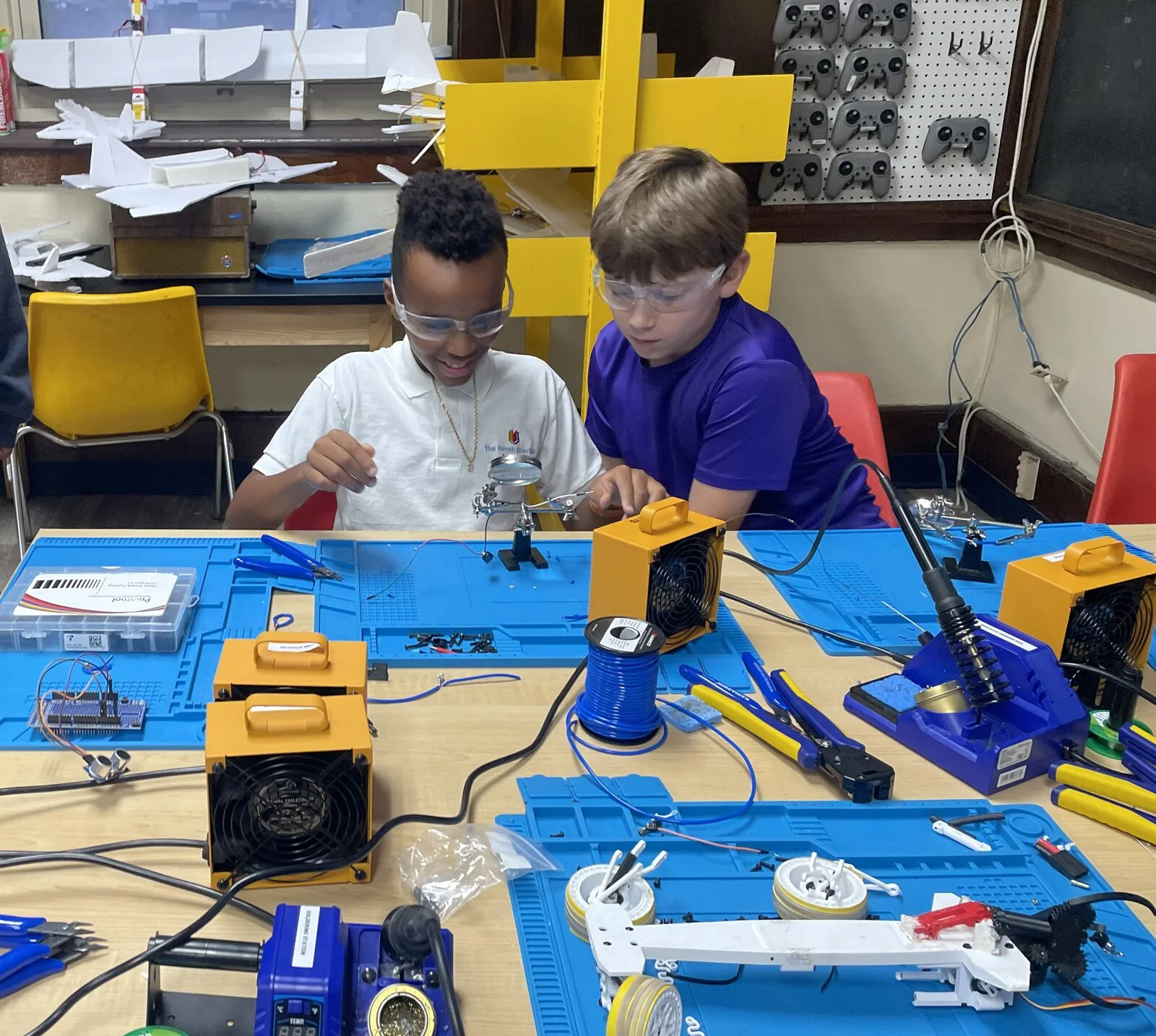
How a class works
Design. Make. Evaluate.
Students learn mechanical and electrical engineering by doing: they design components, solder the electronics, build the airframe, fly it, then fix what broke and fly again. Every student builds their own aircraft.
Every class is 90 minutes and runs the same way
Concept
10 min
The idea of the week, shown on a demo aircraft.
On the bench
65 min
Students design, solder and build their own aircraft or the part of the week: a wing, a mechanism, the power system.
Debrief
15 min
What flew, what broke, what to change next.
Build in pairs, fly with a spotter
- A partner checks the work before it is glued
- On flight days, the partner watches the airspace
- Roles swap every session
Safety first
- Soldering with fume extractors, knives and glue guns, all under close supervision
- Batteries charged and handled by staff only
- The federal TRUST safety test before flying outdoors
Inside the studio
Where your child builds and flies
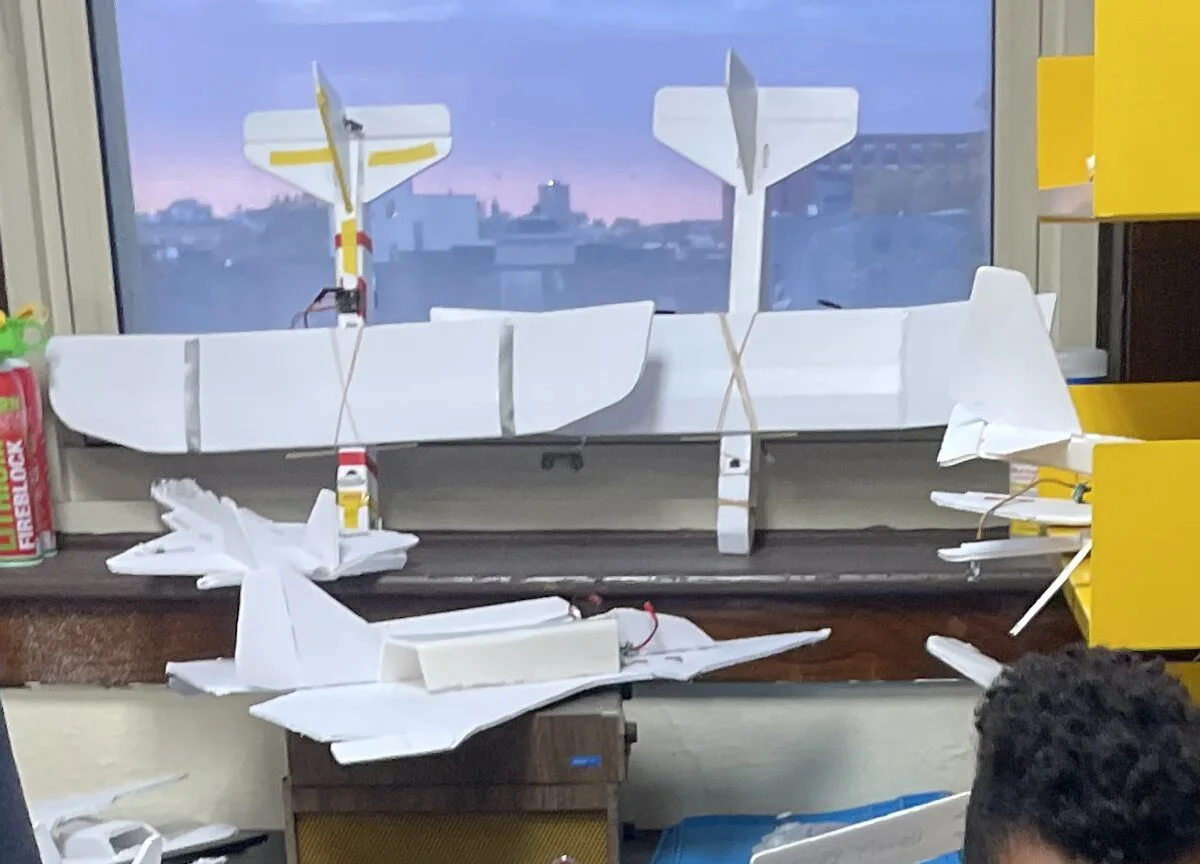
Foam and paper RC airplanes
Students build both, plus special projects like a catapult launch system.
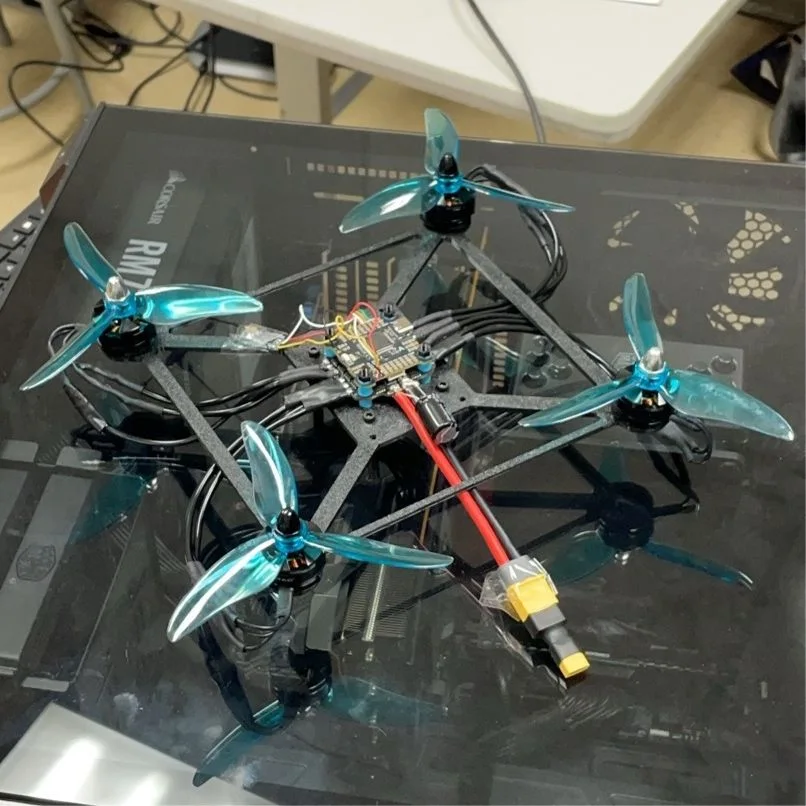
Drones and mechanisms
Frames, motors and custom 3D-printed parts students design.
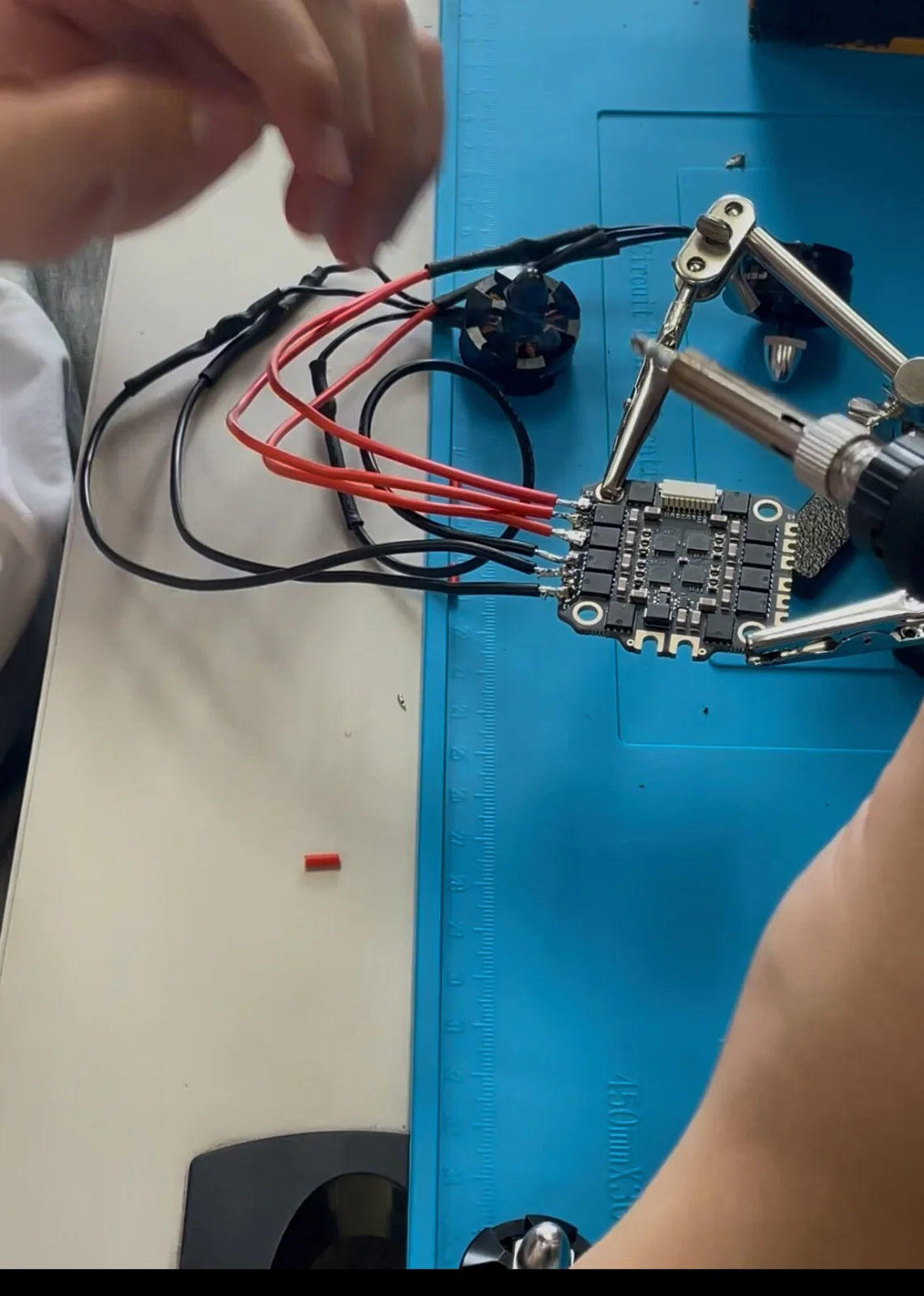
Soldering the electronics
Students solder motors, speed controllers and wiring themselves.
The pathway
Each course leads to something bigger
Bigger projects → Bigger competitions → More skills
100 · Start here
Foam & paper RC planes
- You build
- Foam and paper RC airplanes, then a drone, soldered and wired by students.
- You compete
- Races, Battle Blimps and a hackathon fly-off for families.
- New skills
+ Soldering and wiring
+ CAD, 3D printing
+ Physics of flight
200 · Go further
Your own design
After a 100 course
- Courses
- Aerospace Engineering IIRemote Pilot Prep, 16+
- You build
- An aircraft of your own design, plus special projects like a catapult launch system.
- You compete
- Flight tests of your design, and the federal Part 107 drone pilot exam at 16+.
- New skills
+ Mechanical design
+ Mechanisms
+ Drone rules and airspace
300 · Specialize
Advanced designs & rockets
After a 200 course
- Courses
- Rocketry I*RC Aerial Combat*
- You build
- Rockets, and aircraft and drones built for special missions.
- You compete
- Mission challenges, from aerial combat to timed missions.
- New skills
+ Rocket stability
+ Mission design
Advanced team
Jet-style airframe
In development
- Courses
- Mach Challenge team
- You build
- A 3D-printed jet-style airframe around a ducted fan.
- You compete
- Thrust tests, then a first flight.
- New skills
+ Propulsion
+ Test data and reports
* New for Spring 2027.
Where it leads
A portfolio website, ready for applications
We help every student build a portfolio website. Each semester they add their builds, CAD files, flight data and videos. It is ready for high school and college applications; some colleges, like MIT, invite a maker portfolio.
Beyond the classroom
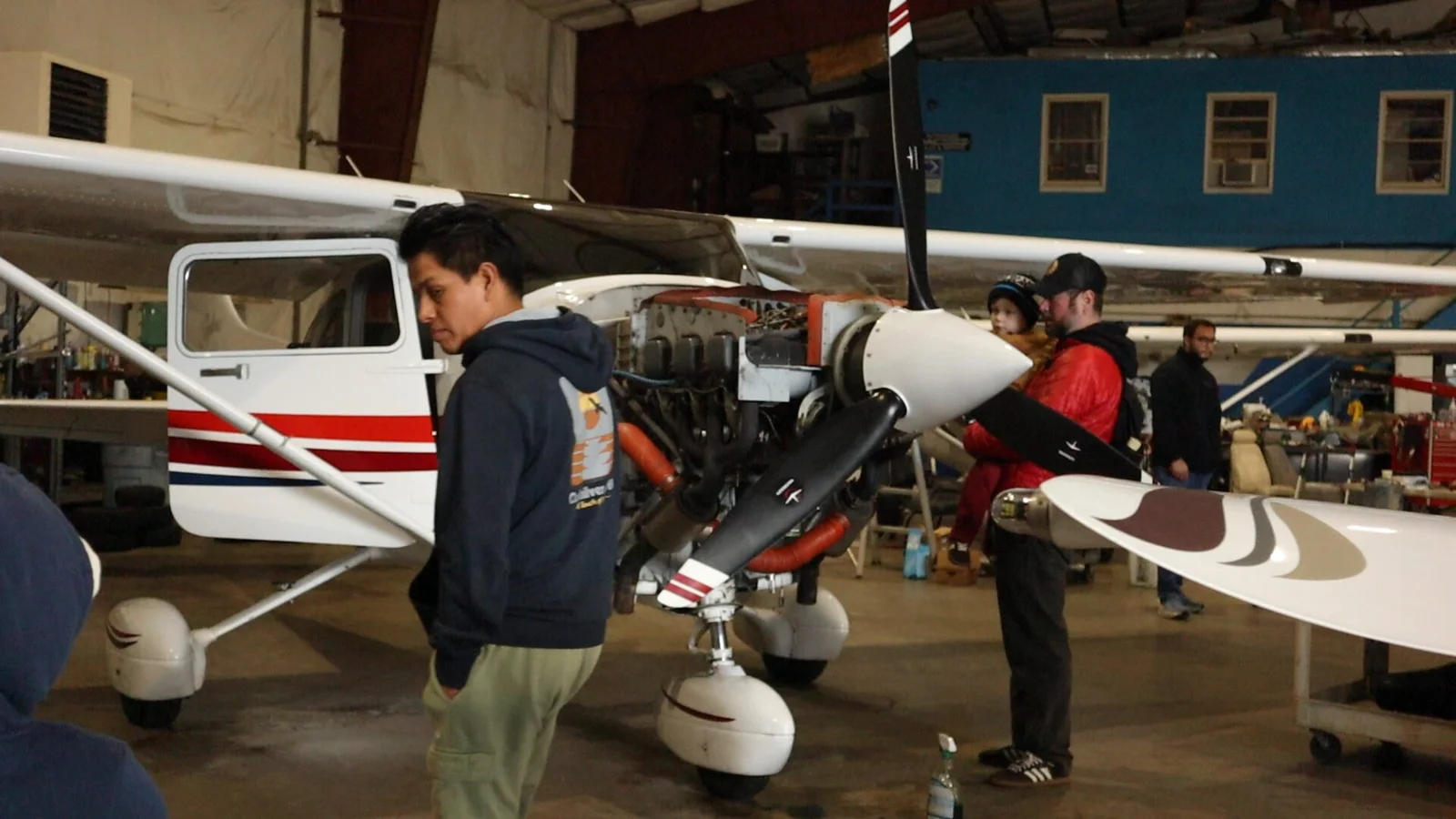
Monthly field trips to airports, hangars and aerospace companies, included in tuition.
Showcase and hackathon every semester, presenting to families and competing in teams.
Internships for advanced students on real engineering projects.
Taught by engineering students from
100+
students since 2025
Monthly
field trips, included
Questions from parents
Frequently asked questions
Does my child need any experience?
No. Students start with a foam RC airplane and learn soldering, wiring and design step by step. Students are grouped by age and experience.
Is it safe?
Knives, glue guns and soldering irons are used under close supervision with fume extractors, and batteries are charged and handled by staff only. Students prepare for the free federal TRUST safety test before flying outdoors.
What does it cost?
From $265/month for one 90-minute class a week, with all materials and monthly field trips included. You can start with a $25 trial class.
What does my child leave with?
A portfolio of aircraft they designed, built and flew, a personal portfolio website, and at 16+ the option to prepare for the federal Part 107 drone pilot certificate.
For families
Try a class before you commit.
Try a 90-minute class for $25. It counts as the first class of the plan you choose. From $265/month, all materials included, no experience needed.
Bringing this program to your school? Talk to us →* New for Spring 2027. We prepare students for federal exams and certificates; the federal agencies examine and certify. The Mach Challenge is an academy project in development.